

Etsy Abandoned Carts - Why Shoppers Add to Basket But Don’t Buy
Oct 15, 2026There is a particularly annoying stage of selling on Etsy where people are doing almost everything you want them to do...
They find the product.
They click on it.
They look through the listing.
They even add it to their basket.
And then...
Nothing.
No order.
No lovely little Etsy cha-ching.
Just a product apparently sitting in somebody's basket having a nice time. 😅
And understandably, this can make you think "If they liked it enough to add it to their basket, why the hell didn't they buy it?"
This is where I want you to be a little bit careful, because an abandoned Etsy cart is useful information, but it doesn't automatically tell us why the person didn't buy...
It doesn't automatically mean your price is too high.
It doesn't mean you immediately need to send them a massive discount.
And it definitely doesn't mean you need to start changing your whole Etsy shop.
What it does tell us is that the buyer got quite a long way through the journey...
They found you.
They were interested enough to click.
They were interested enough to consider buying.
Now we need to work out what might have created the final bit of hesitation.
What does an Etsy abandoned cart actually mean?
Think about a buyer moving through your Etsy shop like this:
Find it → Click it → Consider it → Add to basket → Buy
If somebody adds your product to their basket, we've already got further than somebody who simply saw the listing in search and carried on scrolling.
That's useful.
But adding something to a basket isn't a promise to buy it...
Think about your own online shopping habits.
You probably add things to baskets because you're comparing products, checking the final price, thinking about it, waiting until payday, buying something later or simply using the basket as a temporary holding area while you continue shopping.
I absolutely do this!
My online baskets are basically tiny warehouses full of good intentions. 😂
So don't treat every abandoned basket as a lost guaranteed order - instead, treat it as another clue.
If you're still at the earlier stage where people are reaching your products but aren't even getting this far, I'd start with my guide to Why Is My Etsy Shop Getting Views But No Sales? first.
An abandoned basket is slightly different because the shopper has already shown a stronger level of buying intent.
Why do people add Etsy products to their basket and not buy?
There isn't one answer...
And that's important because otherwise we're going to end up doing the classic handmade-business thing of seeing one symptom and immediately deciding we know the cause.
"It must be my price."
Maybe - but maybe not!
A shopper could abandon their basket because they're comparing your product with somebody else's...
They might be checking how much delivery costs.
They might not know whether it'll arrive before the birthday they're buying it for.
They might be confused about personalisation.
They might want the product but aren't ready to spend the money today.
They might have been interrupted halfway through buying it.
They might simply have changed their mind.
Or there could genuinely be something about the listing, price, delivery or trust that is making them hesitate.
The useful question is not "How do I force everybody who adds this to their basket to buy it?"(you can't).
The better question is "Is there anything within my control that's making the final buying decision harder than it needs to be?"
Now we've got something useful to work with...
Check whether this is actually a pattern first
Before you redesign your listing because somebody added a necklace to their basket on Tuesday and apparently hasn't bought it by Wednesday lunchtime, zoom out a little bit.
One abandoned basket isn't enough information to diagnose the business.
What I would be interested in is a repeated pattern...
Is one particular listing regularly getting attention but struggling to convert?
Are shoppers adding several products to baskets but sales across the whole shop remain low?
Are you getting plenty of visits and buyer interest, but comparatively few orders?
Or has this happened twice and you're currently holding a full business investigation over two strangers on the internet? 😅
This is where your Stats become useful.
My guide to Etsy Stats for Beginners: Views, Visits & Conversion Rate Explained will help if you're not quite sure what you're looking at.
Remember - you don't need to analyse every number Etsy gives you... you're simply trying to understand whether this is a consistent point of hesitation or a completely normal bit of online shopping behaviour.
Don't immediately decide that your Etsy price is too high
This is probably the first place a handmade seller's brain goes...
Someone wanted the product.
They added it to their basket.
They didn't buy it.
Therefore... "My price must have scared them off."
Slow down!
Price could absolutely be part of the decision, but an abandoned cart doesn't prove that.
The more useful thing to look at is price against perceived value.
Let's say you're selling a £65 handmade necklace...
The buyer might happily pay £65 if the listing makes it obvious that they're getting something beautifully made, properly finished, gift-ready, made from quality materials and genuinely special.
But if the photographs are unclear, the description doesn't explain the materials and they're not quite sure what arrives in the box, suddenly £65 feels like a much bigger decision.
That isn't necessarily a pricing problem.
It could be a value communication problem.
This is also why I wouldn't automatically slash your prices or run a permanent discount every time somebody hesitates.
If pricing is something you're already worried about, read Are Your Etsy Prices Too Low? A Handmade Pricing Method for Beginners before changing anything.
A cheaper product isn't automatically an easier product to buy... sometimes it's just a less profitable version of the same confusing listing.
Wondering why your Etsy listings aren't selling?
I've put together a free 72-page guide to help you figure out what's actually stopping the sales and what to do about it.
✅ Find out why people aren't buying
✅ See what needs fixing first
✅ Get a clear plan instead of guessing
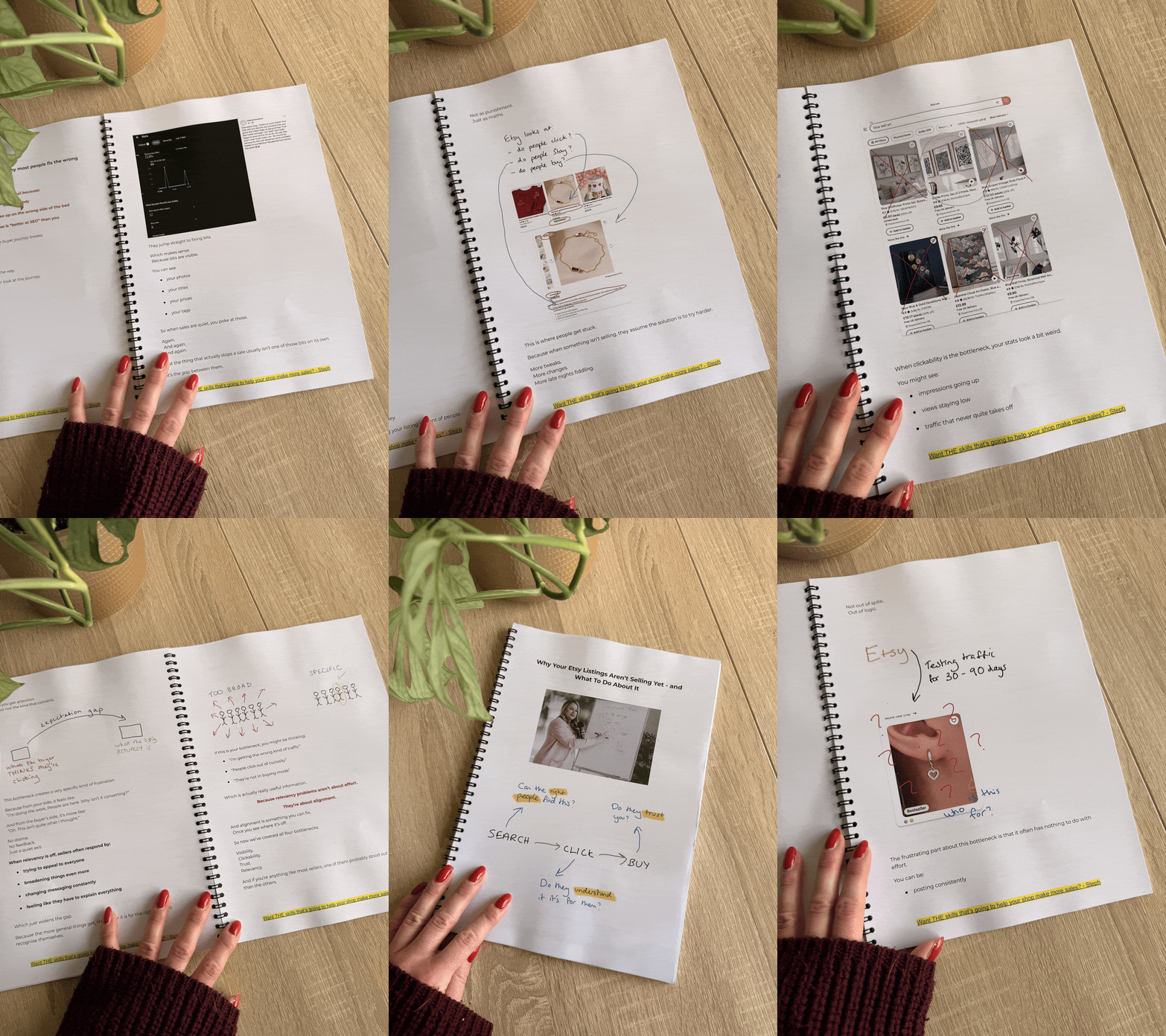
GET THE FREE GUIDE →
If shoppers are already getting as far as adding your products to their baskets, I'd use the guide to look specifically at the things that could be creating hesitation after they've decided they like the product.
You don't necessarily need more traffic at this point - you need to make that final buying decision feel easier.
Check your delivery information before doing anything dramatic
Delivery is a big one for handmade products because Etsy buyers aren't always buying something for themselves whenever it happens to arrive.
They're buying birthday presents.
Wedding gifts.
New baby gifts.
Anniversary presents.
Christmas gifts.
Teacher gifts.
Things they need for actual dates in the calendar etc.
So imagine somebody loves your personalised mug...
They add it to their basket.
Then they start thinking "Will this actually arrive before Mum's birthday next Friday?"
If that answer isn't obvious, you've introduced hesitation.
The same applies if delivery suddenly feels more expensive than expected once they're further through the buying process.
Etsy itself has acknowledged that shipping cost can affect whether shoppers complete a purchase, which is why I'd always look at the whole final buying decision, not just the product price.
Now, I'm not saying you should immediately offer free delivery either!
Please don't accidentally turn this article into "Steph told me to pay everyone's postage forever."
I did not. 😂
Your delivery strategy still needs to make financial sense.
What I do want is for the buyer to understand what they'll pay, roughly when the item will arrive and what happens after they order.
If delivery uncertainty is a recurring problem, my article on why buyers don't trust new Etsy shops yet goes into this in much more detail.
Make sure personalisation isn't turning checkout into homework
This is especially important if you sell personalised or made-to-order products.
You might understand your options perfectly because you've created them.
Your buyer doesn't.
They may be sitting there wondering things like...
"Do I put the name here?"
"Which colour am I actually choosing?"
"Does this option include the gift box?"
"Can I have three names or only two?"
"What happens if I spell it wrong?"
If the buying process starts feeling like a small administrative task, some people are going to leave and think about it later.
And we know what I'll think about it later sometimes means!
Goodbye forever. 👋
Go through the listing as though you've never seen the product before...
Check your variation names.
Check the personalisation instructions.
Check your photographs.
Check exactly what's included.
Make sure somebody can work out how to order without needing a treasure map.
Your Etsy description still matters at this stage
I know people love to declare that nobody reads descriptions.
They do.
Not necessarily every word from beginning to end while taking notes - but buyers absolutely look for information when they need reassurance.
And if they're close enough to buying that they've added something to their basket, this is exactly when the boring practical information can matter.
Your listing should make it easy to find things like:
- Size
- Materials
- Colour
- What's included
- Personalisation instructions
- Processing time
- Delivery expectations
- Care instructions
- Gift packaging, if relevant
- Anything the buyer commonly asks before ordering
If people keep messaging you with the same question, then that's often a very good clue that the answer deserves to be easier to find on the listing!
I've got a full guide to writing Etsy descriptions that sound human and actually help buyers make a decision if yours currently says something along the lines of beautiful handmade item, perfect gift, made with love and then quietly gives up.
Trust can disappear right at the end of the journey
A buyer can love the product and still hesitate over the shop (this is especially common when you're newer).
They might look at the reviews.
Your About section.
Shop policies.
Previous customer photographs.
How professional and consistent the listings look.
Whether the delivery information feels credible.
They're effectively asking "Am I comfortable giving this person my money?"
And that question can become more important the higher the price or the more important the purchase.
A £6 little stocking filler and a £180 personalised wedding keepsake don't necessarily require the same amount of reassurance... This doesn't mean you need to manufacture trust or pretend your shop is older than it is.
It means you should use the trust you've genuinely got.
If you have reviews, make the most of them!
Complete the relevant shop information.
Show the product clearly.
Explain the buying process.
Make policies understandable.
Reduce those little moments where the buyer has to stop and wonder...
Should I use an Etsy abandoned cart coupon?
You can - but I wouldn't use one as a substitute for fixing an obvious problem.
Etsy currently lets sellers set up targeted abandoned-cart offers.
If an eligible shopper has an item from your shop sitting in their basket for more than two hours, Etsy can email them an offer if you've enabled it and the shopper is opted into receiving Etsy marketing emails.
Etsy also says that abandoned-cart coupons expire 60 days after the coupon is created.
So yes, they can be useful.
Somebody has already shown interest and a small incentive might be enough to bring them back...
But there's a big difference between "The listing works, the margins work and I'm testing whether a targeted offer converts more interested shoppers"
and "Nobody is buying so I've knocked 25% off everything and I'm hoping for the best"
One is a commercial test, the other is panic with a promo code.
Before switching an abandoned-cart discount on, know what that discount does to your profit.
If the product is already tightly priced, don't casually sacrifice your margin because somebody put it in a basket.
And if your listing is confusing, a coupon doesn't answer the unanswered question.
Etsy has also added targeted-offer performance information to its Sales and Discounts area, including data such as offers sent, purchases, conversion rate and revenue, so if you use these offers you now have more evidence to judge whether they're actually helping rather than simply assuming they are.
That's exactly how I'd treat it...
Test it. Measure it. Decide from the evidence.
Why isn't Etsy sending my abandoned cart coupons?
This is worth mentioning because I've seen sellers assume something is broken when the numbers aren't as high as expected.
Not every person who leaves your product in a basket will receive your abandoned-cart offer.
Etsy says shoppers need to be eligible and opted into receiving marketing emails. Etsy also limits how frequently shoppers can receive this type of targeted offer.
So don't look at ten apparent basket adds and expect ten emails to go out.
And definitely don't use the number of abandoned-cart emails sent as though it's a perfect count of everybody who considered buying.
It's another useful data point - not the entire buyer journey.
Look for where the hesitation is happening...
If I were looking at this with you, I wouldn't start by asking what discount we can run - I'd ask what the behaviour is telling us.
If one specific listing gets lots of interest but repeatedly struggles to turn that interest into sales, I'd look closely at that listing.
If the whole shop gets plenty of interest but poor conversion, I'd look for wider issues such as trust, pricing presentation or delivery.
If buyers regularly message asking whether something will arrive in time, we've got a pretty obvious delivery-information clue.
If they repeatedly ask what's included, we've got a clarity clue.
If your conversion improves mainly when you heavily discount, I'd want to understand the margin and value perception before declaring that your normal price is automatically wrong.
And if you don't actually have enough data yet?
Wait.
You don't need to diagnose the business from six shoppers and a Tuesday afternoon.
A quick Etsy abandoned cart check
Pick the listing that seems to be getting the most basket activity or buying interest.
Then look at it like you've never seen the product before.
Ask yourself:
- Can I immediately understand what I'm buying?
- Does the price make sense against what the listing is showing me?
- Can I see the size or scale?
- Do I know exactly what's included?
- Is personalisation obvious?
- Can I understand when it'll be dispatched?
- Is delivery likely to surprise me later?
- Are the reviews and other trust signals reassuring?
- Is there an unanswered question that could stop me pressing Buy?
And then pick the biggest weakness.
Not seven weaknesses.
Not a Sunday afternoon rebuilding the whole shop.
Just one - and fix it.
Give it enough time and traffic to generate useful evidence.
Then look again.
An abandoned basket isn't necessarily bad news...
This is probably the bit I'd like you to leave with.
Someone adding your product to their Etsy basket and not buying can be frustrating.
But it also tells you something quite important.
They got close.
You've already done enough to get their attention.
They clicked.
They considered the product.
They showed buying intent.
So rather than treating the abandoned cart as proof that the whole listing has failed, look at that final bit of the journey.
"What might make this purchase feel easier, clearer or safer?"
Sometimes that's better delivery information.
Sometimes it's clearer personalisation.
Sometimes it's stronger proof.
Sometimes it's making the value easier to see.
Sometimes a targeted offer genuinely helps.
And sometimes the shopper just wasn't ready to buy today!
You cannot control every abandoned basket, but you can make sure you're not creating unnecessary reasons for people to abandon them.
That's the job.
And if you still can't work out what might be stopping people from going from "Ooh, I like this" to "Yep, I'm buying it", use the free guide I linked earlier and work through the listing before you start changing random things.
Much more useful than immediately knocking a tenner off and hoping Susan comes back. 😅


