

How Long Does It Take to Get Your First Sale on Etsy?
Oct 15, 2026
Prefer to listen instead of read? This episode is also available as a podcast, so you can stick it on while you’re making, packing orders, or staring at your social media stats wondering what on earth is going on.
You open your Etsy shop and then you're just kind of waiting...
Refreshing.
Refreshing.
Refreshing.
Hoping that first sale comes in.
And the annoying thing is, then you go on social media and see another brand-new shop celebrating because they got their first sale in three days!
And it leaves you thinking "Well, how long does it take for me to get my first sale?"
There is no reliable rule that says you should get your first Etsy sale in two days, five days or 30 days... that just does not exist.
Two shops can be open for exactly the same amount of time and have completely different amounts of relevant traffic.
So personally, I wouldn't judge your Etsy shop based on how long you've been open.
I'd judge whether enough suitable customers have actually come through your door and had the chance to buy yet.
Being open for a month doesn't tell me very much
When someone says to me "Steph, my shop has been open for one month. Why haven't I had my first sale yet?"
my initial thought is, okay, great...
But that doesn't actually tell me very much about the shop itself.
One seller might have brought an existing audience with them...
Maybe they've already got an email list of 1,000 people.
Maybe they've got a social media following.
Maybe people already know who they are, what they sell and why they should buy from them.
Shop B might be completely different.
They might have opened with zero audience and very little visibility.
So saying "My shop's been open for one month. Where is my first sale?"
doesn't really work.
Equally, a shop that has had 500 visits is not in the same position as a shop that's had ten... you can't really compare those two businesses based purely on time.
So the first question isn't how long your shop has been open, the much more useful question is "Has anyone really had a chance to buy from me yet?"
Check whether the right people are actually finding you
Before you panic, start by looking at whether relevant people are actually finding the products you've listed.
If hardly anyone has visited your shop yet, you don't have strong enough evidence to say the product itself is the problem.
You haven't really tested it yet.
Then start thinking about what happens when somebody does see your product in Etsy Search.
"Is my thumbnail image, title and price giving somebody enough of a reason to click?"
Because appearing in search isn't the same thing as somebody choosing you.
And once they arrive on your listing "Can they quickly understand what the product is, what they're actually going to receive and why it's worth buying?"
Those are completely different stages.
Someone needs to find you.
Then they need to click.
Then they need to feel confident enough to buy.
New Etsy shops have another hurdle too
Something else you need to factor in is that newer Etsy shops naturally have less trust built up over time.
There's a reason reviews and those lovely little five stars sit right next to Etsy shops and listings.
Buyers use them.
If you're brand new, you're probably not going to have all of that proof yet.
That doesn't mean you can't make sales - it just means your listing may need to work a little harder to make somebody feel confident about buying from you.
So I want you to think about this little flow:
Found → Click → Buy
Your job as a new Etsy seller isn't to sit there thinking "I've been open for X amount of time. Why haven't I got sales?"
It's to look at each part of that journey.
Because if something is getting stuck at any one of those stages, that's where I want your attention going.
And if you're looking at your shop thinking "Okay, but I still don't know which bit is stopping my first sale."
this is exactly what my free guide will help you work through...
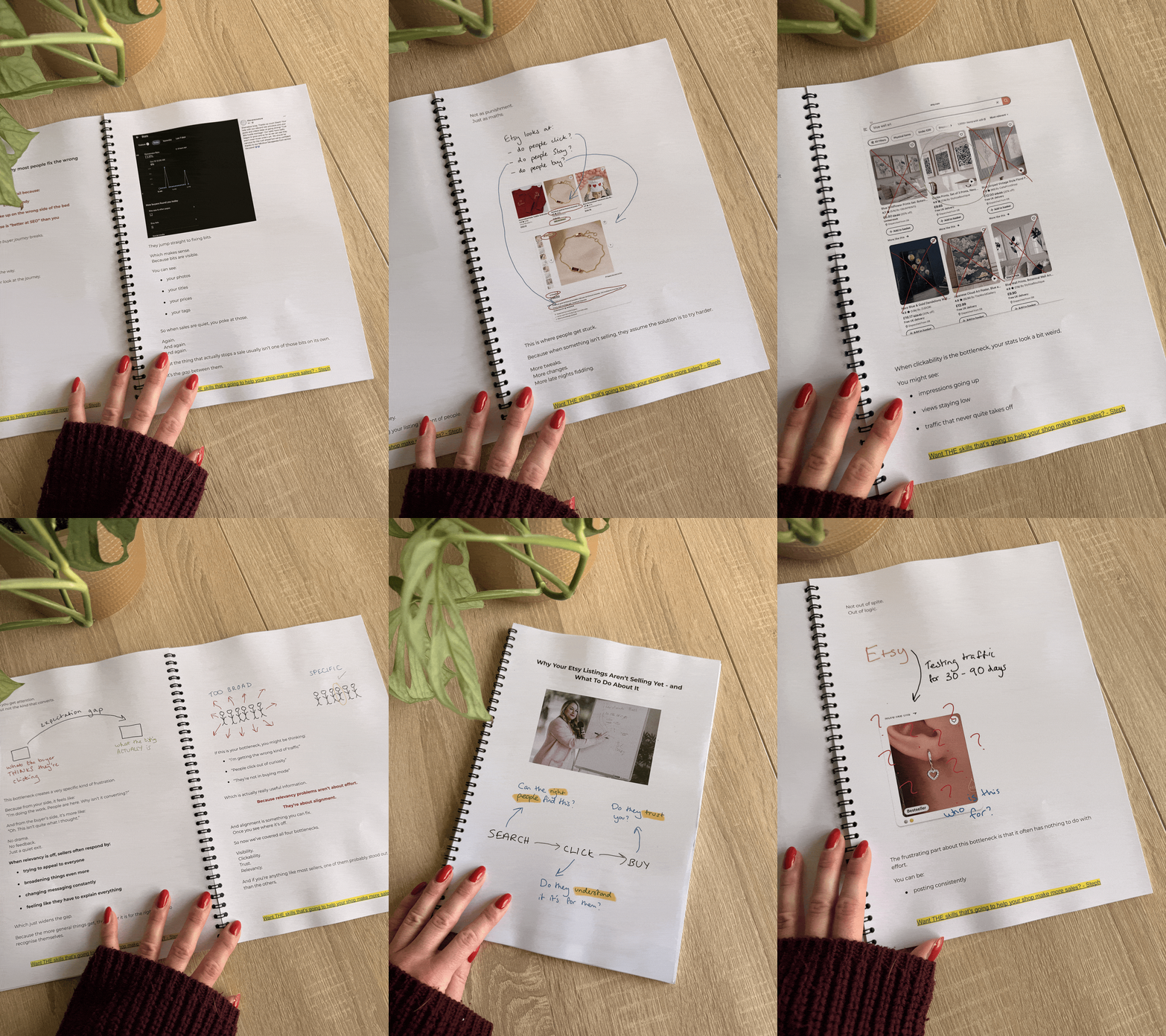
Wondering why your Etsy listings aren't selling?
I've put together a free 72-page guide to help you figure out what's actually stopping the sales and what to do about it.
✅ Find out why people aren't buying
✅ See what needs fixing first
✅ Get a clear plan instead of guessing
GET THE FREE GUIDE →
Don't worry, it's not 72 pages of me giving you a giant essay to read either. It's really visual, with diagrams and explanations to help you work out what might actually be happening in your shop.
If you're struggling to make those first sales, go and grab that before you start randomly changing everything.
What to do while you're waiting for that first Etsy sale
This is normally the next thing people want to know...
"Okay Steph, I understand what you're saying, but what do I actually do while I'm waiting?"
Or
"If I want to make that first sale happen, what should I be doing?"
You do not need to spend every day changing your titles, prices, photographs and tags.
Please don't!
You want to make sure the basics are solid enough for a buyer to understand and trust the listing.
Then focus on getting relevant eyes into the shop.
Traffic.
Because that's what gives you useful evidence.
If you're not getting visits to your products or your shop, you can't accurately decide...
"It must be my product."
"It must be my price."
"It must be my photographs."
You don't have enough information yet.
Watch the early signals
While you're waiting for your first order, start watching what shoppers actually do.
Look at things like:
Visits
Clicks
Favourites
Questions
Which products attract more attention
If one listing is getting much more interest than everything else, keep your little beady eye on that one. 👀
Learn from it.
Why might people be noticing it more?
Is the product clearer?
Is the photograph stronger?
Is it more relevant to what your customer wants?
Are more people favouriting it?
Is somebody asking questions about it?
Those little signals are useful when you haven't got lots of sales data yet.
Give your changes enough time to tell you something
This is another really important bit.
You need to give changes enough time to actually tell you something rather than constantly changing things based on how you feel about the shop that day.
Your first sale is useful.
It's exciting.
I completely understand why you want it.
But the bigger goal is learning why somebody chose to buy.
Because once you begin understanding that, you can create more of those opportunities.
That's much more useful than getting one random sale and having absolutely no idea why it happened.
Twelve visitors is not enough to pronounce the whole business dead
If you've had 12 people visit your Etsy shop, I'm not ready, personally, as your coach to pronounce the whole business or product range dead because nobody bought - and you shouldn't be either!
Quite honestly, I'd want a product to have had around 100 relevant eyeballs on it before we even start properly investigating what might be happening.
Because 12 people not buying doesn't tell us very much.
You need enough useful evidence before you start making big conclusions.
So stop repeatedly asking "How long do I need to wait until I get my first sale?"
And ask this instead "Have enough of the right people seen this product yet?"
That is a much more useful business question.
Your first Etsy sale isn't on a timer
Your first sale might happen tomorrow.
It might take a few weeks.
Another seller might get theirs three days after opening...
That doesn't automatically tell you their shop is better than yours or that you've done something wrong.
They may have had a completely different amount of traffic.
A different audience.
Different products.
Different visibility.
Different trust.
Different circumstances.
So stop counting days, hours and weeks - start counting the useful evidence.
Are relevant people finding you?
Are they clicking?
Are they showing signs of interest?
Which products are attracting attention?
Are buyers asking questions?
Have enough people actually had the opportunity to buy?
Those are the things that will help you understand what to work on next.
Because getting that first sale is lovely - but learning how to build a shop where you understand why sales happen and how to create more opportunities for them is what sets you up much better in the long run.


